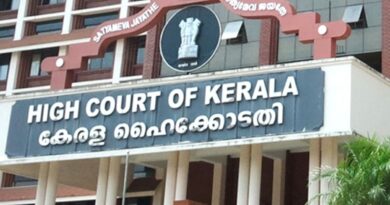

Madras High Court: No Social Media Take Down Without Proof of Commercial Misuse of Personality Rights
The Madras High Court has clarified that a celebrity cannot seek an immediate ban on social media posts by merely claiming a violation of personality rights. The Court held that such rights can be restricted only when there is clear evidence of commercial exploitation of a person’s identity.
Justice N Senthilkumar dismissed the interim applications filed by celebrity chef and entrepreneur T Rangaraj, who had sought to restrain costume designer Joy Crizildaa and others from sharing posts, interviews, photos, and videos related to their personal relationship.
Rangaraj had approached the Court claiming that social media posts made by Crizildaa between July and August 2025 falsely portrayed them as being in a marital relationship. He alleged that these posts harmed his reputation and caused commercial damage to his brand, “Madhampatty Pakashala”. Based on this, he sought a gag order and removal of the content.
However, the Court made it clear that personality or publicity rights are mainly meant to prevent unauthorised commercial use of a person’s identity. Justice Senthilkumar observed that simply sharing links, photographs, or personal narratives is not enough to prove a violation, unless there is material showing that such content was used for commercial gain.
The Court also stressed that free speech under Article 19(1)(a) of the Constitution cannot be curtailed lightly. It held that granting a blanket ban on expression at the interim stage would go against settled constitutional principles.
Importantly, the Court noted that Rangaraj himself had admitted to having a relationship with Crizildaa. At the same time, he sought to prevent her from sharing her version of events. Crizildaa, on her part, produced prima facie material such as WhatsApp chats and photographs suggesting intimacy between them.
Given these disputed facts, the Court held that the truthfulness and authenticity of the content can only be decided after a full trial, based on evidence. Such issues cannot be settled through interim injunctions.
In strong observations, the Court remarked that the case appeared to be an attempt to silence individuals and social media users who were expressing views against the plaintiff. Since Rangaraj failed to establish a prima facie case, and the balance of convenience favoured Crizildaa, both interim applications were dismissed.
——————————————–
Have a case update, article, or deal to share? Courtroom Today welcomes contributions from lawyers, law firms, and legal professionals. Write to contact@courtroomtoday.com