Madras High Court Orders Recovery of 500+ Acres Encroached Balasubramanya Swamy Temple Land
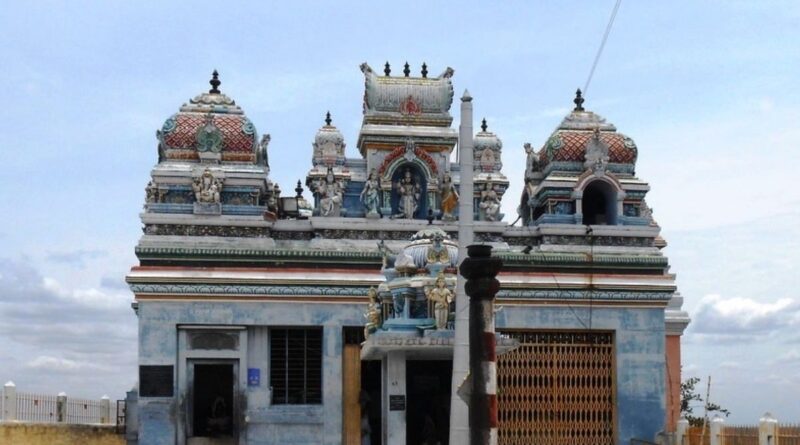
The Madras High Court in A Radhakrishnan Vs P Madhusudhan Reddy recently directed authorities to recover hundreds of acres of temple land belonging to the Balasubramanya Swamy Temple in Vennaimalai, Karur district. The court emphasised that a deity, recognised as a juristic person in law, cannot be denied legal protection simply because it lacks voting rights.
The judgement was delivered by a Division Bench of Justices P. Velmurugan and B. Pugalendhi at the Madurai Bench of the Madras High Court. The Bench stressed that constitutional governance cannot be influenced by electoral considerations when it comes to protecting the rights of temple properties.
The case concerned large-scale encroachments over lands belonging to the Balasubramanya Swamy Temple. According to records examined by the court, around 507.88 acres of temple land had been encroached upon over time, while authorities had managed to recover only about 93.64 acres so far.
The court made a sharp observation about the challenges in recovering these lands, stating, “The poor deity has no voting rights. On the other hand, the mighty encroachers have valuable votes. In a democratic polity, electoral arithmetic sometimes appears to influence administrative resolve. But constitutional governance is not subordinate to electoral expediency.”
While reviewing the list of encroachers, the Bench noted that several influential individuals were involved. The court found that the encroachments included 27 government officials, 49 industrialists, and 38 influential persons, raising concerns about the reluctance of authorities to enforce judicial directions effectively.
The judges further observed, “One cannot ignore the disturbing possibility that this very composition explains why, irrespective of party lines, there appears to be a consistent reluctance on the part of the political establishment to allow authorities to carry the court’s orders to their logical conclusion.”
Invoking its parens patriae jurisdiction, the court remarked that the judiciary had been monitoring the matter for several years. Despite repeated orders and the formation of monitoring committees, substantial portions of the temple land still remain under illegal occupation.
To ensure faster resolution of pending disputes, the High Court directed civil courts dealing with cases related to the temple lands to decide them within six months. Matters where interim protection was refused were ordered to be prioritised for final disposal.
The court also directed the Hindu Religious and Charitable Endowments (HR&CE) Department to submit detailed status reports every three months. These reports must include information about recovered lands, ongoing eviction proceedings, litigation status, and other actions taken to reclaim temple properties.
For effective enforcement of eviction proceedings, the Superintendent of Police in Karur was directed to provide protection to officials involved in the recovery process. The Registrar of Societies was also asked to examine the activities of certain organisations and take appropriate action if unlawful activities are discovered.
Additionally, the HR&CE Department was instructed to publish complete details of temple lands on its website. The information should include the extent of lands, lease periods, lessee details, and lease amounts. The court observed that transparent public auctions could help improve revenue generation for the temple.
Reiterating the importance of enforcing judicial orders, the Bench stated that the authority of the court cannot depend on administrative convenience and that the State machinery must act with constitutional responsibility and commitment to the rule of law.
——————————————–
Have a case update, article, or deal to share? Courtroom Today welcomes contributions from lawyers, law firms, and legal professionals. Write to contact@courtroomtoday.com