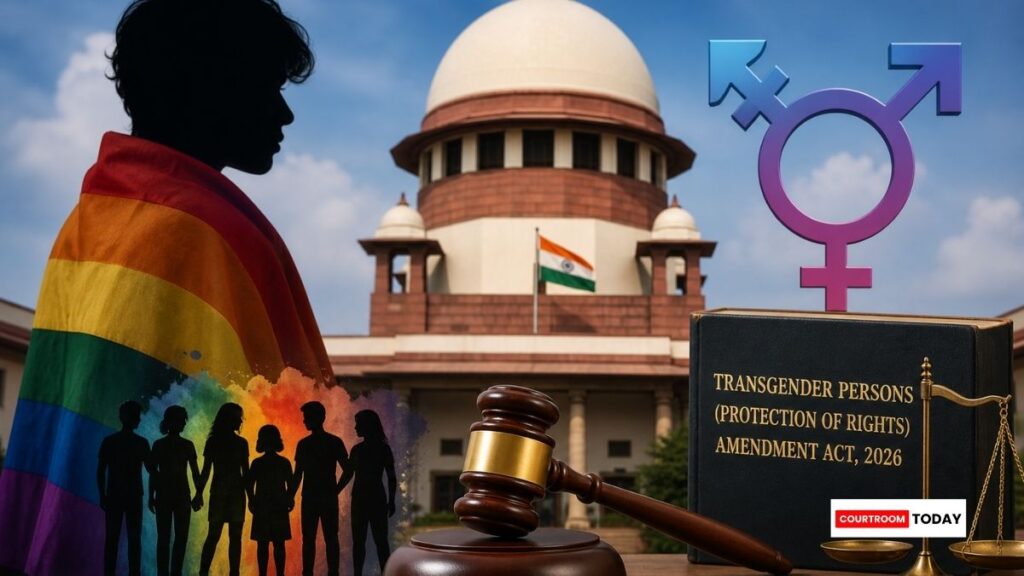
The challenge to the Transgender Persons (Protection of Rights) Amendment Act, 2026, has brought renewed focus on the principles laid down in National Legal Services Authority v. Union of India. The Supreme Court has now declined to stay the operation of the amended law.
The matter was heard by a Bench comprising Justice Surya Kant and Justice Joymalya Bagchi. The Court issued notice to the Central government and all States, seeking their responses to multiple petitions challenging the law’s constitutional validity.
While taking cognisance of the concerns raised, the Bench made it clear that no interim relief would be granted. The Court stated, “Issue notice… No question of grant of any interim order..no question of interim stay,” and directed that the matter be placed before a three-judge Bench.
The Amendment Act, which received presidential assent on March 31, significantly alters the existing legal framework governing transgender rights. It redefines the criteria for recognising transgender identity and introduces stricter penal provisions for offences such as forced gender change and bodily harm.
However, the legislation has drawn criticism from various stakeholders, including members of the transgender community and opposition leaders. Concerns have been raised over the absence of consultation before the Bill was introduced and passed in Parliament.
A key issue relates to the removal of the principle of self-identification, which was recognised in the NALSA judgement. The new law instead requires medical certification for gender recognition, prompting fears that it undermines individual autonomy and dignity.
Senior Advocate Abhishek Manu Singhvi, appearing for some petitioners, argued that the amendment effectively prohibits self-recognition of gender. He contended that this change disrupts ongoing gender-affirming treatments and contradicts established constitutional principles.
The Bench, however, raised concerns about possible misuse of self-identification. The Chief Justice questioned whether individuals could falsely claim transgender identity to access welfare benefits or reservations, given the country’s large population.
Singhvi responded by stating that such apprehensions were unfounded and reiterated that the amendment nullifies the essence of the NALSA judgement without addressing its legal basis. Justice Bagchi, however, observed that the amendment alters the foundational framework previously examined by the Court.
The Union government, represented by Tushar Mehta, defended the law by stating that it aims to prevent coercive practices such as forced gender reassignment or castration.
The Supreme Court ultimately proceeded to issue notice without granting a stay. Similar petitions challenging the amendment are also pending before various High Courts, indicating that the legal debate on transgender rights is set to continue.
——————————————–
Have a case update, article, or deal to share? Courtroom Today welcomes contributions from lawyers, law firms, and legal professionals. Write to contact@courtroomtoday.com