
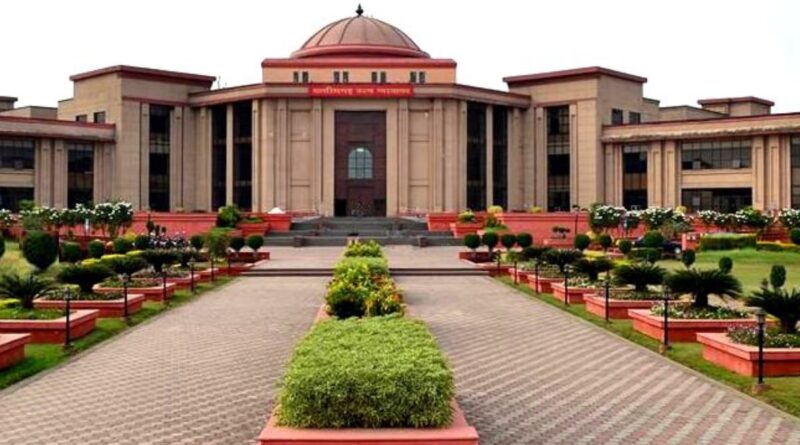
No Permission Needed for Home Prayer Meetings: Chhattisgarh High Court
The Chhattisgarh High Court in Badri Prasad Sahu & Anr. v. State of Chhattisgarh & Ors. has clarified that there is no legal restriction on conducting prayer meetings within one’s own home. The Court held that such activities do not require prior permission from authorities, provided no law is violated.
The matter arose from a petition challenging police notices issued to the petitioners, restraining them from organising Christian prayer meetings inside their residential premises. The petitioners sought protection from alleged harassment and interference by local authorities.
The case was heard by Justice Naresh Kumar Chandravanshi, who examined whether any statutory provision required prior approval for conducting religious gatherings in private homes. The Court found no such restriction under the law.
In its order, the Court observed:
“The petitioners are registered owners of said lands where they used to organise ‘Prayer Meeting’ of the followers of Christianity at their dwelling house since 2016. There is no such law restraining any persons to organize prayer/ prayer meeting in their dwelling house. Further, there is no need to get prior permission from any authority for conducting a prayer/prayer meeting, if the same is organised without violating any law.”
The petitioners stated that they owned adjacent plots in the village of Godhna, Janjgir-Champa district, and had been conducting prayer meetings since 2016 without causing any disturbance. They also highlighted that a hall had been constructed within their home for this purpose.
Despite this, the Station House Officer had issued multiple notices under Section 94 of the Bharatiya Nagarik Suraksha Sanhita (BNSS), directing them to stop such gatherings. The petitioners argued that these actions violated their fundamental rights under Article 19 of the Constitution.
The State opposed the petition, contending that the petitioners had prior criminal cases and had not obtained permission for organising such meetings. However, the Court did not find these arguments sufficient to justify the restrictions imposed.
The Court emphasised that unless there is a violation of law, such as noise pollution or disturbance to public order, authorities cannot interfere in private religious practices. It clarified that action can only be taken if such issues arise.
Accordingly, the High Court quashed the police notices and directed authorities not to interfere with the petitioners’ civil rights or harass them under the guise of enquiry.
At the same time, the Court maintained a balanced approach by reiterating that authorities retain the power to act in cases of nuisance or law and order concerns.
This ruling reinforces the protection of religious freedom within private spaces, while also ensuring that public order considerations remain safeguarded.
——————————————–
Have a case update, article, or deal to share? Courtroom Today welcomes contributions from lawyers, law firms, and legal professionals. Write to contact@courtroomtoday.com