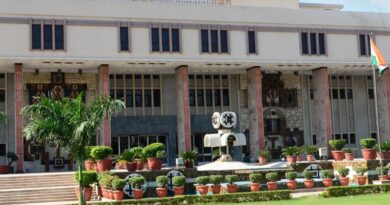

Right to Be Considered for Promotion Is Fundamental Right: Punjab & Haryana High Court
The Punjab and Haryana High Court, in Kulwant Singh vs State of Punjab, has reaffirmed that the right to be considered for promotion forms part of the fundamental rights guaranteed under the Constitution.
The Court emphasised that this right flows from Articles 14 and 16(1), which ensure equality and equal opportunity in public employment. It observed that any delay in considering eligible employees for promotion directly affects their career progression and financial growth.
The judgement was delivered by Justice Harpreet Singh Brar while allowing a petition filed by a junior engineer employed with the Municipal Corporation of Amritsar. The petitioner sought promotion to the post of Assistant Corporation Engineer after completing the required service period.
The petitioner argued that he had completed seven years of service and met the eligibility criteria under the applicable rules. Despite this, his case was not placed before the Departmental Promotion Committee (DPC) during its meeting held on January 28, 2025, even though multiple vacancies existed.
On the other hand, the State opposed the claim by contending that the petitioner’s diploma, obtained through part-time mode, was not valid and therefore rendered him ineligible for promotion.
Rejecting this argument, the Court held that the applicable rules contained a protective provision for employees who were already in service when the 2020 Amendment Rules came into effect. It clarified that such employees could not be denied consideration for promotion solely on the ground of qualification deficiencies.
“This Court is of the considered view that the petitioner squarely falls within the ambit of the aforesaid proviso… even if the petitioner’s diploma obtained through part-time/distance mode is neither valid nor recognized, the same is not a prerequisite for his consideration for promotion,” the Court stated.
The Court further noted that the petitioner had completed the required seven years of service on January 2, 2024, and was therefore fully eligible to be considered for promotion.
Importantly, the High Court stressed that unnecessary delays in holding DPC meetings can have serious consequences. It observed that such delays not only cause financial loss to employees due to deferred promotions but also postpone their eligibility for future advancements.
To address this issue, the Court directed the State authorities to conduct DPC meetings on a quarterly basis. This, it said, would ensure timely consideration of eligible candidates and prevent administrative delays.
Allowing the plea, the Court granted notional promotion to the petitioner from the date he became eligible, along with all consequential benefits. It also directed the authorities to pass the necessary orders within three weeks.
——————————————–
Have a case update, article, or deal to share? Courtroom Today welcomes contributions from lawyers, law firms, and legal professionals. Write to contact@courtroomtoday.com