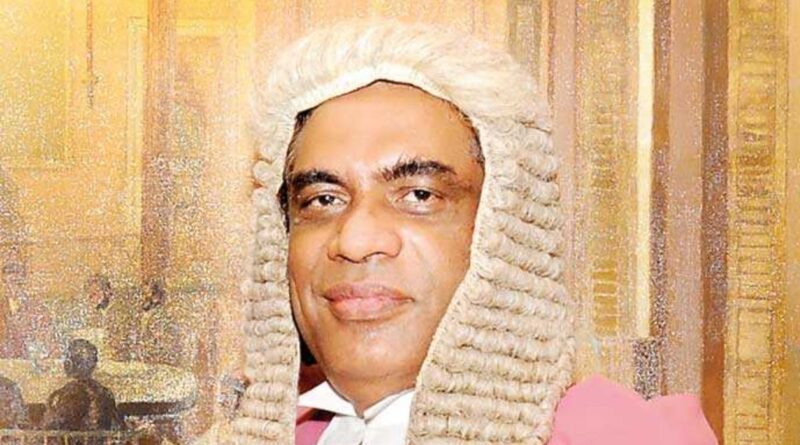
Sri Lankan Supreme Court Judge Justice A.H.M.D Nawaz Moves Karnataka High Court Seeking ‘Right to be Forgotten’
In Justice A.H.M.D Nawaz v. Ministry of Electronics and Information Technology & Ors., the Karnataka High Court recently issued notice on a petition filed by Sri Lankan Supreme Court judge A.H.M.D. Nawaz seeking removal of allegedly defamatory online material. The plea invokes the constitutional “right to be forgotten.”
The petition was heard by Justice Sachin Shankar Magadum on March 5, 2026. The Court directed that notices be issued to the relevant respondents and scheduled the matter for further preliminary hearing on March 16, 2026.
Justice Nawaz has approached the Court requesting directions to the Ministry of Electronics and Information Technology and Google India to remove allegedly defamatory content available online. The petition also asks for steps to prevent the re-publication or circulation of similar material in the future.
According to the plea, certain online articles contain defamatory allegations relating to a crime the petitioner claims he never committed. The judge has requested that the search results linked to such content be blocked or restricted.
The petition further seeks an order directing respondents to impose a complete ban on relevant URLs so that the disputed content cannot be easily accessed through online searches. It also requests recognition of the petitioner’s “right to be forgotten,” arguing that continued circulation of the material harms his reputation.
While issuing notice, Justice Magadum directed government counsel Sri Manu P. Kulkarni to accept notice on behalf of the concerned government departments. The petitioner’s counsel was also instructed to serve notice to other respondents through email.
In addition to the Central government and Google, the Court issued notice to two Sri Lankan news platforms—Colombo Telegraph and Lanka e-News—which allegedly published the content in question.
The petitioner has explained that he chose not to initiate legal proceedings in Sri Lanka. According to the plea, filing a case within his own jurisdiction might create apprehensions of bias because he currently serves as a judge of the country’s apex court.
The case raises significant questions regarding the evolving scope of the “right to be forgotten” within Indian constitutional law, particularly in cross-border contexts involving foreign public officials and online platforms.
The Karnataka High Court will now examine whether such relief can be granted and what obligations internet intermediaries may have in removing or restricting access to disputed content.
——————————————–
Have a case update, article, or deal to share? Courtroom Today welcomes contributions from lawyers, law firms, and legal professionals. Write to contact@courtroomtoday.com