Supreme Court Brings New 2026 Rules for Senior Advocate Designation; Scraps Point System
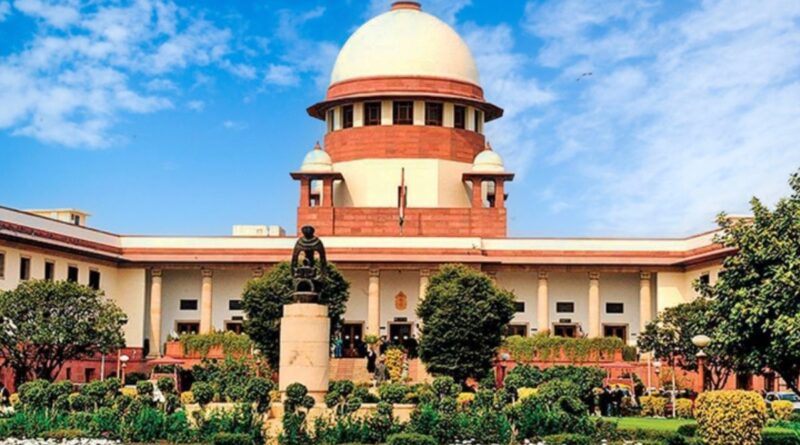
The Supreme Court has issued the “Guidelines for Designation of Senior Advocates by the Supreme Court of India, 2026”, replacing the earlier 2023 framework. The new rules come after the Court’s decision dated May 13, 2025 in Jitender @ Kalla vs. State (Govt. of NCT of Delhi) & Anr. (2025 INSC 667).
In that judgment, the Court held that the earlier point-based evaluation system and interview process were not workable. The point system had been introduced earlier following the directions in the Indira Jaising cases to make the process more objective. However, the Court now believes that such a mechanical method is not suitable for assessing merit and reputation in the legal profession.
The new guidelines were approved in a Full Court meeting held on February 10, 2026 by the Chief Justice of India and the Judges of the Supreme Court.
Permanent Committee to Handle the Process
Under the 2026 guidelines, a Permanent Committee called the “Committee for Designation of Senior Advocates” will handle all matters related to designation.
The Committee will include:
- The Chief Justice of India as Chairperson
- The two senior-most Judges of the Supreme Court as Members
The Committee will function with the help of a Permanent Secretariat. The composition of this Secretariat will be decided by the Chief Justice of India in consultation with the Committee members.
Applications to Be Invited Every Year
The designation process must be initiated at least once every year.
- Applications will be invited through a public notice on the Supreme Court’s official website.
- The Supreme Court Bar Association and the Supreme Court Advocates-on-Record Association will also be informed.
- Applicants will be given at least 21 days to submit their applications online.
After receiving applications, the Secretariat will collect information about each applicant’s reputation, conduct and integrity. The list of proposals will be published on the Court’s website, and stakeholders will be given at least 15 days to submit their views or suggestions.
Eligibility Conditions
To apply for Senior Advocate designation, an advocate must:
- Have at least 10 years of standing as an advocate, or
- Have 10 years’ combined experience as an advocate and as a District and Sessions Judge or Judicial Member of a Tribunal (where eligibility is equal to that of a District Judge).
- Be at least 45 years of age, unless the Full Court relaxes this condition.
- Mainly practise before the Supreme Court. However, those with special expertise before tribunals may be given relaxation.
- Not have had their application rejected in the last two years or deferred in the last one year by the Supreme Court or any High Court.
The applicant must also:
- Have no criminal record.
- Not have been convicted of offences involving moral turpitude.
- Not have been punished for contempt of court or professional misconduct by the Bar Council.
How Applications Will Be Assessed
The Full Court will assess eligible candidates based on three main aspects:
1. Ability
This includes knowledge of law, advocacy skills, legal writing, publications, and the ability to critically analyse judicial decisions.
2. Standing at the Bar
Factors include fairness in court, respectful behaviour towards judges and fellow advocates, professional ethics, mentorship of juniors, pro bono work, reputation, honesty and integrity.
3. Special Knowledge or Experience
Expertise in specialised areas such as Arbitration, Insolvency, Company Law, Intellectual Property, Taxation and similar fields will also be considered.
Decision-Making Process
All eligible applications will be placed before the Full Court.
- The decision will preferably be taken by consensus.
- If consensus is not possible, it will be decided by majority.
- Secret ballot will be used only in exceptional cases, and reasons must be recorded.
The Court may also designate an advocate even if he or she has not applied, provided consent is given.
If an application is rejected, a fresh application can be made after two years. Deferred cases can be reconsidered after one year.
Separate Process for Former High Court Judges
Former Chief Justices and Judges of High Courts can seek designation through a request-cum-consent letter.
However, former judges who are holding full-time post-retirement assignments will not be considered during that period.
Power to Recall Designation
The Full Court has the power to review and withdraw the designation of a Senior Advocate if the person is found guilty of conduct that makes them unfit for the status. An opportunity of hearing must be given before such action.
Any dispute regarding interpretation of the guidelines will be decided by the Chief Justice of India, whose decision will be final.
——————————————–
Have a case update, article, or deal to share? Courtroom Today welcomes contributions from lawyers, law firms, and legal professionals. Write to contact@courtroomtoday.com