
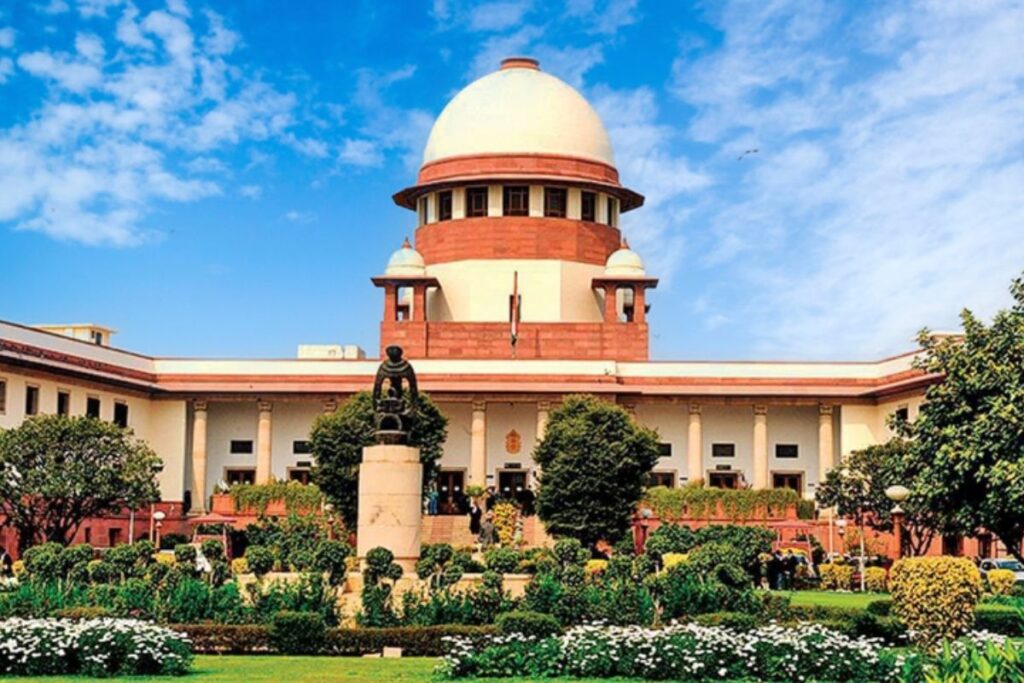
The Supreme Court Collegium has adopted a new policy to ensure smoother transitions in leadership across High Courts. The decision was taken at its meeting held on February 26, 2026. The move focuses on the timely appointment of incoming Chief Justices before vacancies formally arise.
Under the newly introduced system, a judge who is next in line to become the Chief Justice of a High Court may be transferred to that court nearly two months before the post officially becomes vacant. This early transfer aims to prevent administrative gaps.
The Collegium has clarified that the objective is to allow the incoming Chief Justice adequate time to understand the functioning of the concerned High Court. This includes its judicial work, internal procedures, and administrative framework.
In a note explaining the decision, the Collegium stated, “So that such recommendee in the meantime becomes well conversant with the affairs of that High Court and assumes charge of the office of Chief Justice.” The emphasis is clearly on continuity and preparedness.
High Courts often face challenges when a Chief Justice retires and a successor takes charge without sufficient time for transition. Administrative approvals, roster allocations, and case management require familiarity with the system. The new approach seeks to address these concerns.
By placing the incoming Chief Justice in the court beforehand, the Collegium expects a seamless assumption of office. This is intended to reduce delays and avoid disruption in judicial administration during leadership changes.
The policy also reflects a broader attempt to improve efficiency in justice delivery. Leadership stability plays a key role in maintaining discipline, case flow management, and coordination between judges and registry officials.
In line with this new policy, the Collegium has recommended the transfer of Justice Lisa Gill from the High Court of Punjab and Haryana to the High Court of Andhra Pradesh. The recommendation will now be considered by the Central government.
If the Centre approves the transfer, Justice Gill will initially serve as a puisne judge at the Andhra Pradesh High Court. She is expected to assume charge as Chief Justice around April 25, after the current vacancy arises.
This marks the first practical implementation of the newly adopted framework. The decision indicates that the Collegium is attempting structural reforms within the judicial appointment and transfer process to strengthen institutional functioning.
The development may influence future transfers and appointments across High Courts. By planning transitions in advance, the judiciary appears focused on ensuring that leadership changes do not affect court efficiency or public confidence in the justice system.
——————————————–
Have a case update, article, or deal to share? Courtroom Today welcomes contributions from lawyers, law firms, and legal professionals. Write to contact@courtroomtoday.com