Supreme Court Directs Centre to Frame No-Fault Compensation Policy for COVID-19 Vaccine Adverse Events
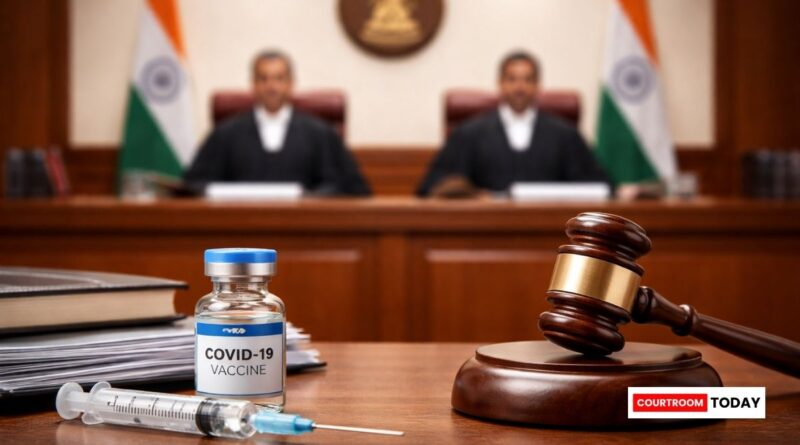
The Supreme Court delivered an important judgement in Rachana Gangu & Anr v. Union of India & Ors. and Union of India v. Sayeeda K.A. & Ors., directing the Central Government to formulate a no-fault compensation policy for individuals who suffer serious adverse effects following COVID-19 vaccination.
A Bench comprising Justice Vikram Nath and Justice Sandeep Mehta issued the direction while hearing petitions concerning alleged deaths and adverse health events following COVID-19 vaccination. The Court clarified that the policy must be framed by the Union Government through the Ministry of Health and Family Welfare.
The case was brought before the Court by petitioners Rachna Gangu and Venugopalan Govindan, who claimed that their daughters died due to complications arising after receiving the COVID-19 vaccine. The petition sought compensation from the government and the constitution of an independent expert committee to investigate vaccine-related adverse effects.
While passing the judgement, the Court noted that the existing system for monitoring Adverse Events Following Immunization (AEFI) would continue to function. The Bench emphasised that India already has a surveillance and monitoring framework to examine vaccine-related adverse events, and therefore there was no need to establish a separate court-appointed expert body.
The Court also directed that relevant data regarding such adverse events should be periodically made available in the public domain. This direction aligns with observations made earlier by the Supreme Court in the 2021 judgement in the Dr. Jacob Puliyel case, which had emphasised transparency in matters related to vaccine safety and public health.
At the same time, the Bench clarified an important legal point regarding the proposed compensation mechanism. It stated that the formulation of a no-fault compensation policy should not be interpreted as an admission of liability or wrongdoing by the Union Government or any other authority involved in the vaccination programme.
The Court further observed that the creation of such a policy would not restrict affected individuals from pursuing other legal remedies available under law. In other words, those who claim injury or loss due to vaccination will still have the option to seek relief through other legal avenues if they choose to do so.
During the proceedings, the Union Government had earlier argued that vaccination against COVID-19 was voluntary and undertaken by individuals after being informed of potential risks. In a counter-affidavit filed in 2022, the government maintained that it could not automatically be held liable for adverse outcomes arising from vaccination.
The Supreme Court reserved its orders in the matter after extensive arguments in November last year. While doing so, Justice Nath had stated that the Court would examine all submissions carefully before deciding whether further directions or institutional mechanisms were necessary.
With this judgement, the Supreme Court has now directed the government to establish a structured compensation framework for serious vaccine-related adverse events, while also maintaining the existing monitoring mechanisms and safeguarding the government from automatic liability.
——————————————–
Have a case update, article, or deal to share? Courtroom Today welcomes contributions from lawyers, law firms, and legal professionals. Write to contact@courtroomtoday.com