Supreme Court Flags Widespread Public Complaints Over Governance and Regulation of Private Universities
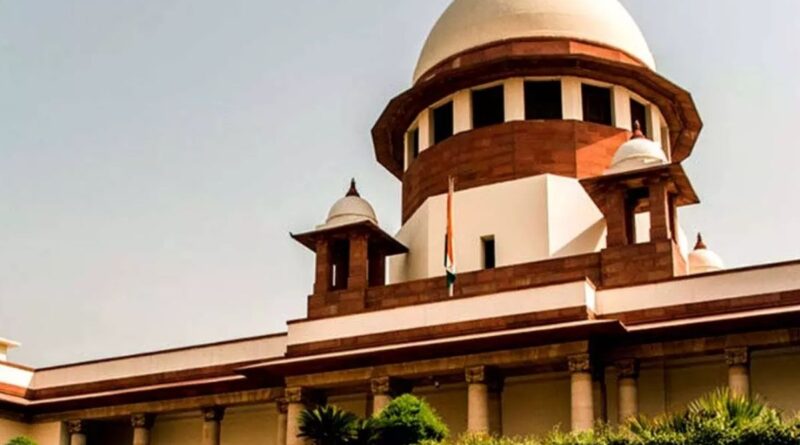
The Supreme Court of India has said that it is receiving a large number of letters and petitions from people across the country raising serious concerns about how private universities in India are being run.
A Bench of Justices Ahsanuddin Amanullah and N V Anjaria noted that the issue goes beyond a single dispute and involves wider public interest. The Court made it clear that it is not looking at the matter only as a legal case, but as a concern linked to the future of education in the country.
Justice Amanullah observed that education cannot be treated like an industry. He stressed that decisions taken today will directly affect future generations, and therefore, the system must be fair, transparent, and accountable.
The observations came while hearing a case filed by a former student against Amity University, where the Court had earlier ordered a nationwide audit of private universities. The case arose after the student alleged harassment by the university for changing her name despite submitting valid legal documents.
The Court expressed strong dissatisfaction with how the Union Government, States, and authorities responded to its earlier directions. In November 2025, the Court had ordered the Centre, all States and Union Territories, and the University Grants Commission to submit detailed affidavits explaining how private universities are established, regulated, and monitored.
Importantly, the Court had directed that these affidavits must be personally signed by top officials such as the Cabinet Secretary, State Chief Secretaries, and the UGC Chairperson. However, the Centre’s affidavit was filed by the Secretary of Higher Education instead of the Cabinet Secretary, which led to strong objections from the Bench.
Justice Amanullah said the Court was surprised by this casual approach, especially when clear directions had been issued. The Court warned that it could have taken stricter steps and asked the Cabinet Secretary to appear personally, but chose restraint for the moment.
The Supreme Court has now directed the Cabinet Secretary to file the affidavit as ordered and explain why exemption should be granted. States that have not complied were also asked to clarify why action should not be taken against them.
The case has expanded into a wider examination of private higher education in India. The Court has sought details on how private universities are created, the benefits they receive from governments, their governance structures, admission policies, faculty recruitment, fee structures, and grievance redressal systems.
The matter will be heard again on January 28, with the Court giving authorities additional time to comply with its directions.
——————————————–
Have a case update, article, or deal to share? Courtroom Today welcomes contributions from lawyers, law firms, and legal professionals. Write to contact@courtroomtoday.com