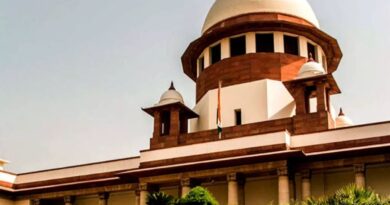

Supreme Court Orders UPSC to Allow Scribe Change Till 7 Days Before Exam, Seeks Screen Reader Plan
The Supreme Court in Mission Accessibility v. Union of India & Anr. has issued important directions to make the Union Public Service Commission (UPSC) examinations more accessible for candidates with disabilities. The Court has allowed candidates who are eligible for a scribe to change the scribe’s name up to seven days before the examination. It has also asked UPSC to present a detailed plan within two months on introducing screen reader software for visually impaired candidates.
The judgment comes on the International Day of Persons with Disabilities, highlighting the need for stronger measures to support persons with disabilities (PwDs) in competitive exams.
A Bench of Justices Vikram Nath and Sandeep Mehta delivered the ruling in a petition filed by Mission Accessibility, an organisation working for disability rights. The petition sought two key changes:
- Flexibility in updating the scribe’s details for the Civil Services Exam.
- Permission to use laptops with screen reader software and accessible digital question papers.
The Court noted that UPSC has already taken a positive step by agreeing to provide screen reader software in future examinations. However, it stressed that practical challenges must be resolved through proper planning, coordination and standardised procedures so that accessibility is not limited to policy documents alone.
Key Directions of the Supreme Court
- Change of Scribe:
Every UPSC exam notification must clearly allow candidates to request a change of scribe up to at least seven days before the exam. Such applications should be decided within three working days, supported by a reasoned order. - Screen Reader Implementation:
Within two months, UPSC must file a detailed compliance affidavit outlining its plan, timeline and method for introducing screen reader software. This includes testing, standardisation and ensuring the facility can be provided from the next exam cycle, if feasible. - Uniform Guidelines:
UPSC must work with the Department of Empowerment of Persons with Disabilities (DEPwD) and the National Institute for the Empowerment of Persons with Visual Disabilities (NIEPVD) to develop uniform protocols for screen readers and other assistive technologies. - Government Support:
The Union Government, through the DoPT and the Ministry of Social Justice and Empowerment, must provide full administrative and technical support for quick implementation and ensure coordination with States and examination bodies. - Integrity of Examination:
All measures must be implemented in a way that ensures complete accessibility while maintaining confidentiality and fairness in the examination system.
The Court emphasised that true inclusivity is achieved not only by framing policies but also by implementing them effectively. It added that UPSC must ensure its examination processes remain transparent, accessible and sensitive to the needs of all candidates.
The Bench noted:
“Equality does not mean uniform treatment but removal of barriers that prevent individuals from standing on an equal footing. Rights of persons with disabilities reflect the constitutional commitment under Articles 14, 19 and 21.”
Case Title: Mission Accessibility v. Union of India & Anr.
*W.P.(C) No. 206/2025 | 2025 LiveLaw (SC) 1163
——————————————–
Have a case update, article, or deal to share? Courtroom Today welcomes contributions from lawyers, law firms, and legal professionals. Write to contact@courtroomtoday.com