Supreme Court Panel Flags Major Rights Concerns, Urges Withdrawal of Transgender Amendment Law
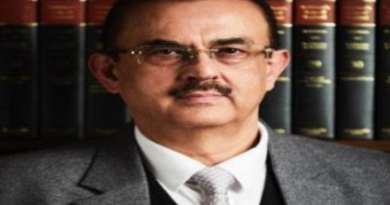
A Supreme Court-appointed committee, led by Justice Asha Menon, has urged the Union government to withdraw the Transgender Persons (Protection of Rights) Amendment Bill, 2026. The panel has flagged serious concerns over the dilution of rights earlier recognised under the law.
The committee communicated its concerns to the Ministry of Social Justice and Empowerment soon after the Bill was passed by Parliament. It highlighted that the proposed changes could significantly alter how transgender persons are recognised and treated under the legal framework.
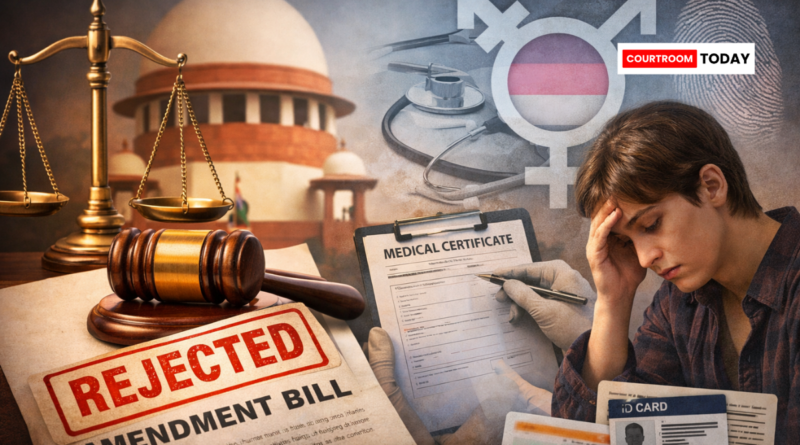
One of the central issues raised is the removal of self-identification as a basis for legal recognition. Earlier, individuals could identify their gender without undergoing medical procedures. The amendment, however, shifts this position by linking recognition to biological traits or medical interventions.
This change may create barriers for individuals who identify as transgender but have not undergone surgery or do not meet prescribed medical criteria. The committee noted that such persons could face difficulties in accessing identity documents and government welfare schemes.
It further observed that the new definition appears restrictive. It may recognise only those born with certain congenital variations or those who have undergone surgical transition. This could exclude a large section of the transgender community.
Concerns were also raised about privacy. The amendment introduces provisions requiring medical institutions to share details of gender-affirming procedures with district authorities. This could lead to sensitive personal information being recorded with the government.
Additionally, the law proposes a structured medical certification process. Identity certificates would be issued by district magistrates based on recommendations from medical authorities. The committee noted that this raises serious questions about confidentiality and dignity.
The panel also questioned the necessity of new penal provisions. It pointed out that many of the offences introduced under the amendment are already covered under existing criminal laws. Increasing punishments without addressing systemic issues may not serve the intended purpose.
Importantly, the committee warned that the removal of self-identification may conflict with the principles laid down in the NALSA judgment of 2014. That ruling recognised the right of individuals to determine their own gender identity as part of fundamental rights.
The committee has recommended that any amendments to the 2019 law should be preceded by wider consultations with transgender communities and stakeholders. It emphasised the need for an inclusive approach.
This advisory panel was constituted by the Supreme Court while hearing a case involving discrimination against a transgender teacher. The Court had directed it to study barriers faced by transgender persons and suggest reforms for better implementation of existing protections.
——————————————–
Have a case update, article, or deal to share? Courtroom Today welcomes contributions from lawyers, law firms, and legal professionals. Write to contact@courtroomtoday.com