Supreme Court Plea Seeks National Public Health Emergency Over Air Pollution Crisis
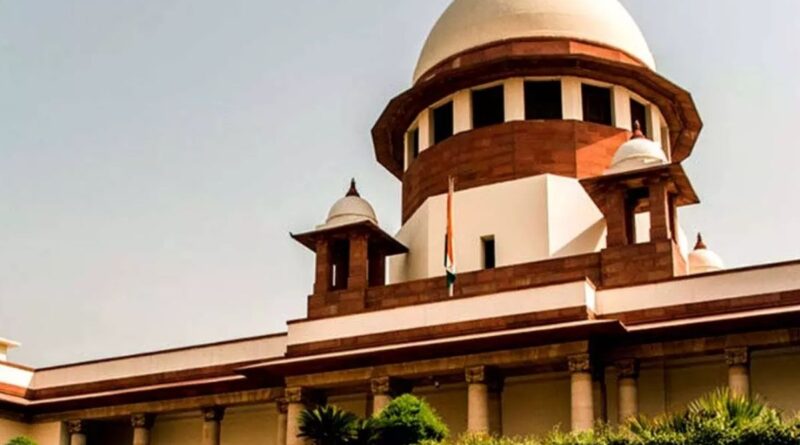
A public interest litigation (PIL) has been filed in the Supreme Court, urging it to declare air pollution a National Public Health Emergency and to direct authorities to take immediate, coordinated action across India.
The plea has been moved by Luke Christopher Countinho, a wellness expert associated with the Prime Minister’s Fit India Movement. He contends that air pollution in India has reached emergency levels, endangering the lives and health of citizens in both cities and villages.
The petition highlights that, despite having a robust policy framework, the air quality in most regions of India remains poor and continues to worsen. It cites violations of the National Ambient Air Quality Standards (NAAQS), 2009, where levels of PM₂.₅ and PM₁₀ have exceeded permissible limits in almost all major cities.
According to official data, the annual limit for PM₂.₅ is 40 μg/m³ and for PM₁₀ is 60 μg/m³. However, Delhi records an alarming 105 μg/m³, Lucknow around 90 μg/m³, and Patna 131 μg/m³, showing gross non-compliance. The plea further notes that the World Health Organization (WHO) recommends far lower levels — 5 μg/m³ for PM₂.₅ and 15 μg/m³ for PM₁₀ — meaning Indian cities are currently facing pollution levels 10–20 times higher than global safety norms.
The petition also reveals that about 2.2 million schoolchildren in Delhi have already suffered irreversible lung damage due to prolonged exposure to toxic air.
The petitioner alleges that government initiatives such as the National Clean Air Programme (NCAP) have largely failed to meet their targets. The NCAP, launched in 2019, aimed to cut particulate matter by 20–30% by 2024 (later revised to 40% by 2026). Yet, as of July 2025, only 25 out of 130 cities have achieved the target, while another 25 have shown increased pollution levels.
It also points out the lack of adequate air quality monitoring stations — India has far fewer than the 4,000 required nationwide. Most monitoring is concentrated in urban areas, leaving rural regions, industrial belts, and informal settlements unassessed, creating what the petition calls “data shadows.”
The plea further criticises weak enforcement of pollution control laws, including the Air (Prevention and Control of Pollution) Act, 1981, citing data that no criminal cases were filed in Delhi in 2019 despite severe violations.
The petitioner also raises concerns over the ineffective use of Graded Response Action Plan (GRAP), saying authorities wait until air quality reaches the “severe plus” category before acting. Symbolic measures such as anti-smog guns and artificial rain, he argues, fail to tackle emissions at the source.
Hence, the petitioner has sought several key directions from the Court, including:
- Declaration of air pollution as a National Public Health Emergency and formulation of a time-bound National Action Plan.
- Making NCAP targets legally binding, with penalties for non-compliance.
- Constitution of a National Task Force on Air Quality and Public Health, led by an independent expert and including officials from key ministries, states, and civil society.
- Curbing stubble burning through state incentives and access to alternative farming technologies.
- Phasing out high-emission vehicles, implementing a vehicle scrappage policy, and promoting e-mobility and public transport.
- Strict enforcement of industrial emission norms and continuous monitoring with public disclosure of data.
The petition has been filed through Advocate-on-Record Rooh-e-Hina Dua and is listed as Luke Christopher Countinho v. Union of India & Ors., W.P.(C) No. 1059/2025.
——————————————–
Have a case update, article, or deal to share? Courtroom Today welcomes contributions from lawyers, law firms, and legal professionals. Write to contact@courtroomtoday.com