Supreme Court Questions UP Bar Council on ₹2,500 Interview Fee for Lawyer Enrolment
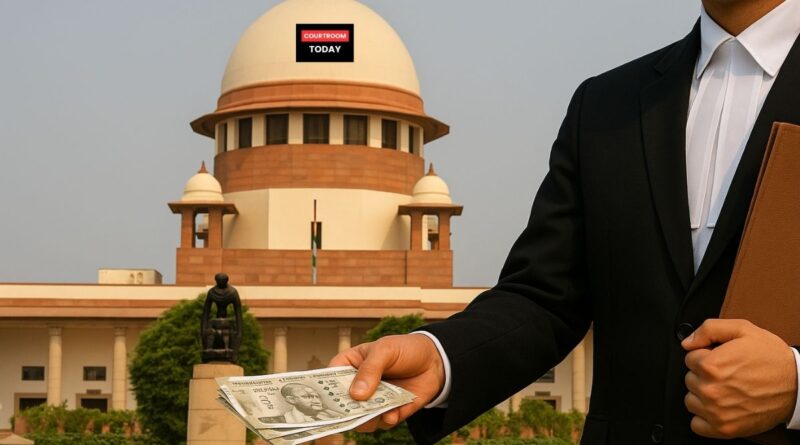
The Supreme Court has asked the Uttar Pradesh Bar Council to explain why it is charging law graduates ₹2,500 for an “oral interview” before allowing them to enrol as advocates. The Court’s reaction in Priyadarshini Saha vs. Pinaki Ranjan Banerjee came after it was informed that this interview system was introduced to bypass an earlier ruling that had capped enrolment fees.
A Bench of Justices JB Pardiwala and PB Varale said the allegation was “very shocking” if found to be true. The judges reminded that in 2024, the Supreme Court had clearly held that no State Bar Council can charge more than the fee prescribed under Section 24(1)(f) of the Advocates Act, 1961.
In the 2024 ruling in Gaurav Kumar v. Union of India, the Court had fixed the enrolment fee at ₹750 for general category applicants and ₹125 for SC/ST applicants. The Bench was told that instead of collecting additional money under enrolment, the Uttar Pradesh Bar Council had started calling candidates for oral interviews and charging ₹2,500 for each interview.
Justice Pardiwala said the complaint suggested an attempt to bypass the Court’s directions by creating a new category of charges. The Bench took the issue seriously and sought a detailed response from the State Bar Council.
The Court asked the Uttar Pradesh Bar Council to file an affidavit explaining the process and the reasons behind the ₹2,500 charge. Till then, the Court has also directed the Bar Council of India (BCI) to examine the issue and take it up with the State Bar Council. The BCI, led by Chairman Manan Kumar Mishra, has been asked to report back by the next hearing.
The matter will now be heard again on January 7, 2026.
This development is part of a series of disputes arising after the Gaurav Kumar judgment. In August 2025, the Supreme Court had similarly warned the Karnataka Bar Council against collecting “optional fees” of ₹6,800 to ₹25,000 under various heads. The Court had stressed that there is no concept of ‘optional fees’ when it comes to enrolment and that only the legally prescribed fee and stamp duty can be collected.
The present case highlights continuing concerns over whether State Bar Councils are complying with the Court’s directions on enrolment charges.
——————————————–
Have a case update, article, or deal to share? Courtroom Today welcomes contributions from lawyers, law firms, and legal professionals. Write to contact@courtroomtoday.com