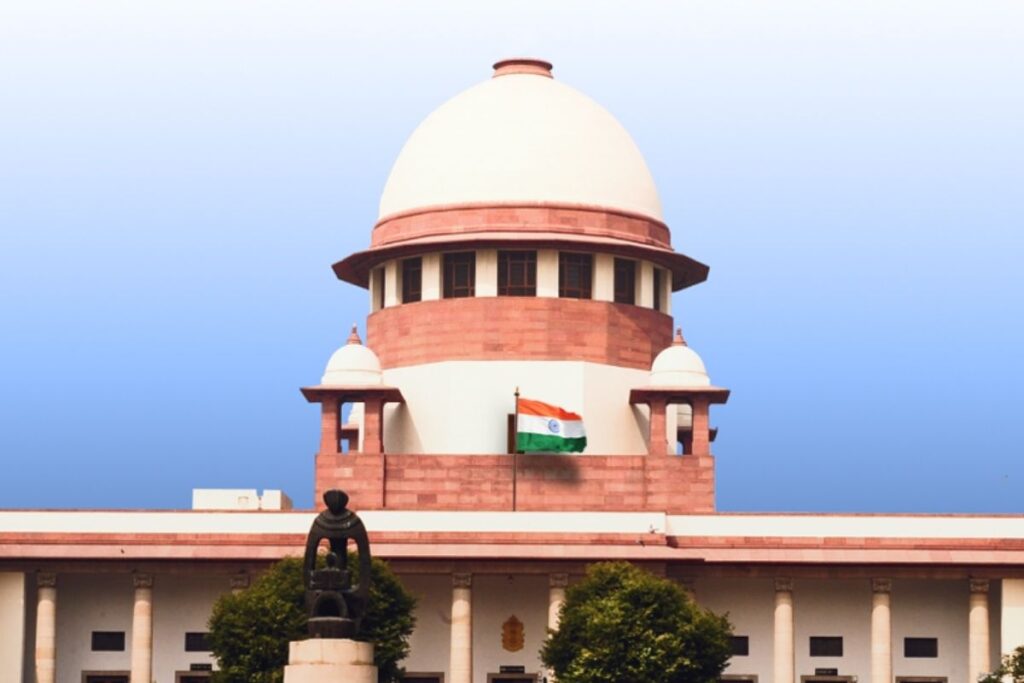
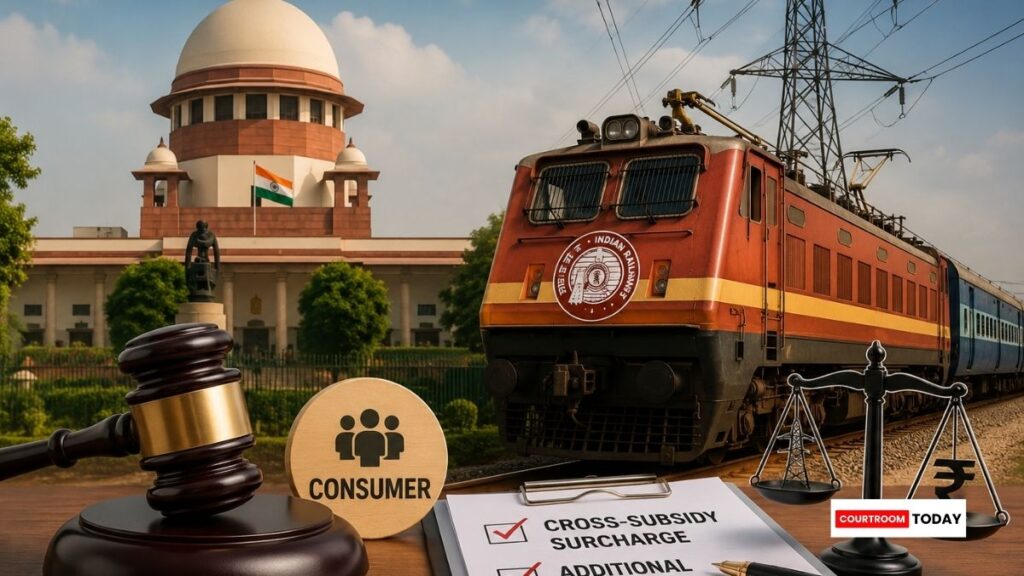
In a significant ruling in Indian Railways versus West Bengal State Electricity Distribution Company Limited & Ors., the Supreme Court has held that Indian Railways is a “consumer” under the Electricity Act, 2003, and not a deemed distribution licensee. The judgement means Railways cannot avoid paying cross-subsidy surcharge and additional surcharge while procuring electricity through open access.
A bench of Justice Dipankar Datta and Justice Satish Chandra Sharma observed that the Railways operates a closed electricity network only for its internal functioning. This includes traction systems, signalling operations, stations, and related facilities. Since electricity is not supplied to outside consumers, Railways cannot claim the status of a distribution licensee.
The Court clarified that merely setting up transmission or distribution lines does not automatically make an entity a distribution licensee under the law. It said the supply of electricity to external consumers is an essential requirement for obtaining such a status.
“The erection of transmission lines or distribution lines as argued by the Appellant(Railways), cannot bestow upon the Appellant the authorisation to carry out supply of electricity that is procured by it, to third party consumers… It is only when electricity is sold or provided to consumers outside the operational domain of the railway, that the activities undertaken by the Appellant could intersect with the obligation of a distribution licensee.”
The dispute started after Railways sought permission in 2015 to procure 100 MW electricity through inter-State open access for traction substations. Railways argued that its extensive electricity infrastructure qualified it as a deemed distribution licensee under Section 14 of the Electricity Act.
The Central Electricity Regulatory Commission had earlier accepted Railways’ argument. However, the Appellate Tribunal for Electricity later reversed that finding. Railways then approached the Supreme Court challenging the tribunal’s decision.
While dismissing the appeal, the Supreme Court explained that two conditions are necessary for an entity to qualify as a distribution licensee. First, it must operate and maintain a distribution system for supplying electricity to consumers. Second, it must supply electricity within a defined area of supply.
The Court noted that Railways only consumes electricity internally and does not distribute power to independent consumers. Therefore, it does not satisfy the legal requirements under the Electricity Act.
The bench also highlighted the financial impact such exemptions could have on power distribution companies. It observed that large consumers like Railways contribute significantly to the financial stability of electricity distribution systems through surcharge payments.
“When high-volume, high-revenue consumers such as the Indian Railways choose to procure electricity through open-access, distribution licensees may be left with underutilised infrastructure and power purchase commitments, leading to financial strain.”
The Supreme Court finally directed distribution companies to calculate the pending surcharge amounts payable by Railways for the period during which open access was availed.
——————————————–
Have a case update, article, or deal to share? Courtroom Today welcomes contributions from lawyers, law firms, and legal professionals. Write to contact@courtroomtoday.com