Supreme Court to Examine NCLT President’s Power to Transfer Cases Across States
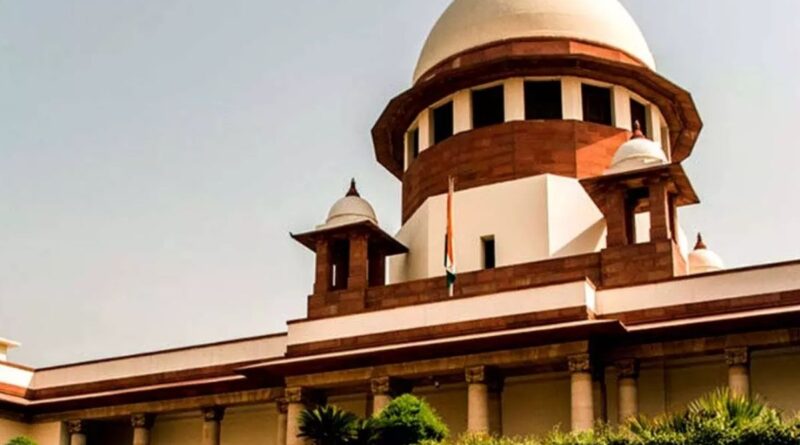
The Supreme Court of India has said it will examine whether the President of the National Company Law Tribunal (NCLT) has the power to transfer cases from one NCLT bench to another bench located in a different state.
This issue came up in a dispute involving ArcelorMittal Nippon Steel India Limited. Two NCLT benches in Ahmedabad had earlier recused themselves from hearing the matter. After this, the NCLT President in Delhi passed an administrative order transferring the case to the Mumbai bench.
The legal debate centres on Rule 16(d) of the NCLT Rules, 2016, which allows the NCLT President to transfer cases “from one Bench to another Bench when circumstances so warrant.”
However, the Gujarat High Court had recently ruled that this power is limited to transfers within the same state. According to the High Court, the NCLT President cannot change or extend the territorial jurisdiction fixed by the Central Government. On this basis, it held that cases cannot be transferred from one state to another.
During the hearing, a Bench led by Chief Justice of India Surya Kant and Justice Joymalya Bagchi expressed doubts about this strict interpretation. The Supreme Court observed that if all members at a particular bench recuse themselves, especially where there is only one bench in that state, transferring the matter to another state may be the only practical solution to prevent the case from coming to a halt.
The controversy arose after ArcelorMittal challenged both the recusal by the Ahmedabad benches and the subsequent transfer to Mumbai. The company alleged that the orders violated the NCLT Rules and were a result of forum shopping and bench hunting by the opposing parties.
The Gujarat High Court had set aside five related orders and directed the NCLT President to re-allot the cases to an Ahmedabad bench. It also suggested that, if needed, a virtual bench could be constituted to ensure speedy disposal. The High Court strongly criticised the trend of pressuring judicial officers, stating that courts and tribunals should take firm action against such conduct rather than opting for recusal.
During Monday’s hearing, the Supreme Court questioned this approach as well. The Bench remarked that parties who threaten or pressure tribunal members should not be allowed to benefit from such behaviour. It also questioned the High Court’s decision to restrict the tribunal’s powers, asking why the High Court should limit the authority granted to the NCLT under its own rules.
To test the issue, the Court gave a hypothetical example where recusal makes it impossible for a case to be heard at a particular location. In such a situation, the Bench noted, transferring the matter to another place may be unavoidable.
The case is now listed for further hearing on February 23, 2026. ArcelorMittal was represented by Senior Advocate Neeraj Kishan Kaul.
——————————————–
Have a case update, article, or deal to share? Courtroom Today welcomes contributions from lawyers, law firms, and legal professionals. Write to contact@courtroomtoday.com