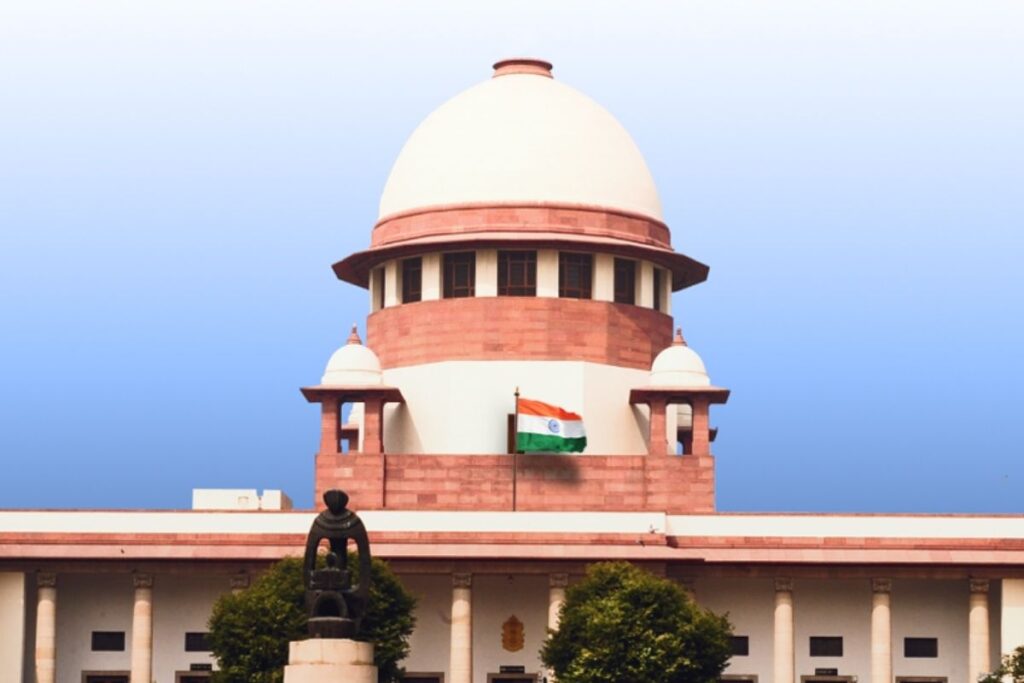
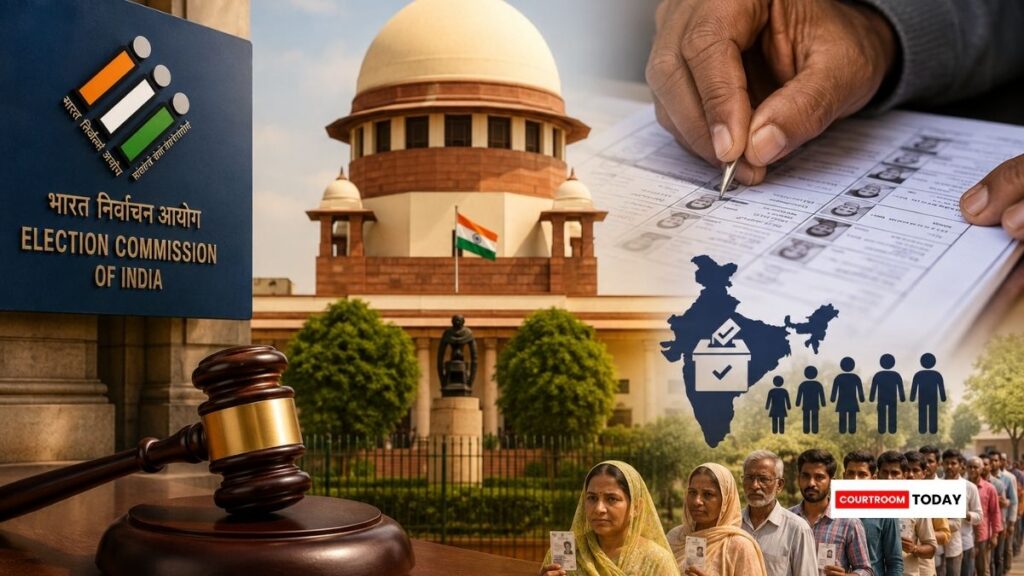
In Association for Democratic Reforms and Ors. v. Election Commission of India, the Supreme Court on Tuesday upheld the Election Commission of India’s power to conduct Special Intensive Revision (SIR) of electoral rolls, holding that the exercise strengthens the constitutional objective of free and fair elections.
A Bench led by Chief Justice Surya Kant and Justice Joymalya Bagchi ruled that the Election Commission derives the authority to conduct SIR from Article 324 of the Constitution along with provisions of the Representation of the People Act, 1950 and related rules.
The Court observed that free and fair elections depend not only on polling but also on the accuracy and credibility of electoral rolls. It noted that large-scale migration, urbanisation and the passage of several decades since earlier intensive revisions justified the Commission’s decision to verify electoral data.
While rejecting the challenge to the process, the Bench clarified that the SIR exercise does not replace the statutory electoral framework. The Court held that special revisions can be conducted whenever required, provided reasons are recorded by the Election Commission.
The judgement stated that the process adopted by the ECI was legally valid even if it differed from ordinary revision procedures used during routine updates. According to the Court, the exercise was closely linked to the constitutional goal of maintaining clean and accurate electoral rolls.
The Court also rejected arguments that the exercise amounted to a backdoor citizenship verification process similar to the National Register of Citizens (NRC). It held that asking voters to furnish supporting documents does not destroy the presumption of citizenship already attached to existing electoral entries.
However, the Bench clarified that any finding made by the Election Commission regarding citizenship is limited only to electoral purposes. Such a determination cannot conclusively decide a person’s citizenship status under the Citizenship Act.
The Court explained that if the Election Commission doubts a person’s eligibility, it must refer the matter to the competent authority of the Union Government for adjudication. Any deletion from the electoral rolls on citizenship grounds would remain subject to the outcome of such proceedings.
On the issue of proportionality, the Supreme Court held that the SIR process meets constitutional standards because the objective is legitimate and adequate safeguards such as notice and hearing remain available to affected persons.
The Court also upheld the Election Commission’s classification of acceptable documents for verification, observing that the framework was based on reasonable criteria connected to electoral integrity. It noted that Aadhaar had already been included in the list following earlier directions.
The Bench further directed the Election Commission to send the names of persons deleted from the 2003 Bihar electoral rolls due to doubtful citizenship to the Central Government within four weeks.
The petitions challenging the SIR were filed by several political leaders, activists and organisations including Association for Democratic Reforms, Yogendra Yadav, Mahua Moitra, Manoj Jha and KC Venugopal.
——————————————–
Have a case update, article, or deal to share? Courtroom Today welcomes contributions from lawyers, law firms, and legal professionals. Write to contact@courtroomtoday.com