Supreme Court Upholds Govt’s Power to Withdraw Tax Concessions in Public Interest
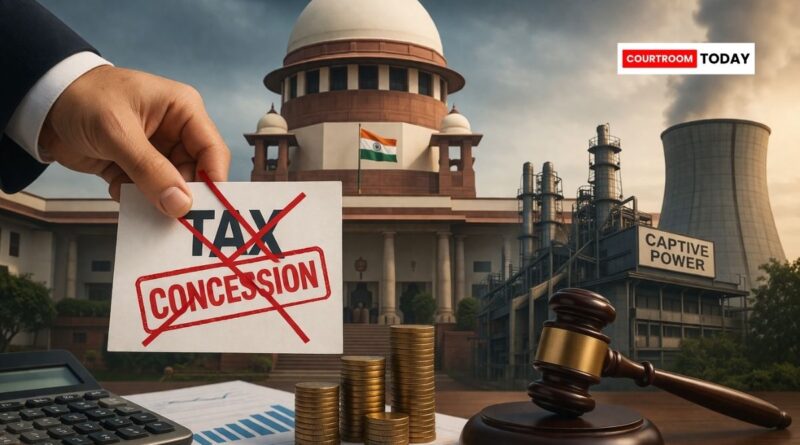
In THE STATE OF MAHARASHTRA & OTHERS VERSUS RELIANCE INDUSTRIES LTD. & OTHERS, the Supreme Court has clarified that tax concessions granted by the government do not create a permanent or enforceable right in favour of industries. The Court emphasised that such benefits can be withdrawn in the public interest.
The case arose from electricity duty exemptions granted by the Maharashtra government since 1994 under the Bombay Electricity Duty Act, 1958. These exemptions were intended to encourage industries to generate captive power for their own use.
However, in 2000–2001, the State decided to partially withdraw these exemptions. The decision was taken due to fiscal constraints and the need to increase public revenue. This withdrawal was challenged before the High Court, which held the move to be arbitrary and discriminatory.
The matter eventually reached the Supreme Court. A bench comprising Justices PS Narasimha and Alok Aradhe examined whether industries could claim a continuing right over such concessions. The Court rejected this claim and upheld the State’s power to withdraw the benefits.
The Court observed, “The recipient of a concession has no legally enforceable right against the Government to grant of a concession except to enjoy the benefits of the concession during the period of its grant. This right to enjoy is a defeasible one, in the sense, that it may be taken away in exercise of the very power under which the exemption was granted.”
It further clarified that such exemptions are statutory in nature and not contractual promises. Therefore, they remain subject to change depending on policy decisions taken in public interest.
The industries had argued that the doctrine of promissory estoppel should prevent the government from withdrawing the concessions. However, the Court rejected this contention, noting that beneficiaries are aware that such exemptions can be modified or withdrawn.
The Court stated, “If a party claiming application of the doctrine acted on the basis of a notification, it should have known that such notification was liable to be amended or rescinded at any point of time, if the Government felt that it was necessary to do so in public interest.”
At the same time, the Court highlighted an important safeguard. It held that while the government has the authority to withdraw concessions, such decisions must follow principles of fairness and reasonableness.
The judgment noted that sudden withdrawal without reasonable notice could cause hardship to industries that have structured their operations based on such benefits. Therefore, the manner of withdrawal must ensure fair play.
In this case, the Court found that the State had acted reasonably. The withdrawal was not retrospective and provided a transition period. The Court also accepted the justification of increasing public revenue as a valid ground.
Accordingly, the Supreme Court upheld the State’s decision and allowed the appeal. It ruled that the withdrawal notifications would take effect after one year, ensuring a balanced approach between public interest and industrial stability.
——————————————–
Have a case update, article, or deal to share? Courtroom Today welcomes contributions from lawyers, law firms, and legal professionals. Write to contact@courtroomtoday.com