WhatsApp Agrees to Comply with India’s Data Privacy Rules
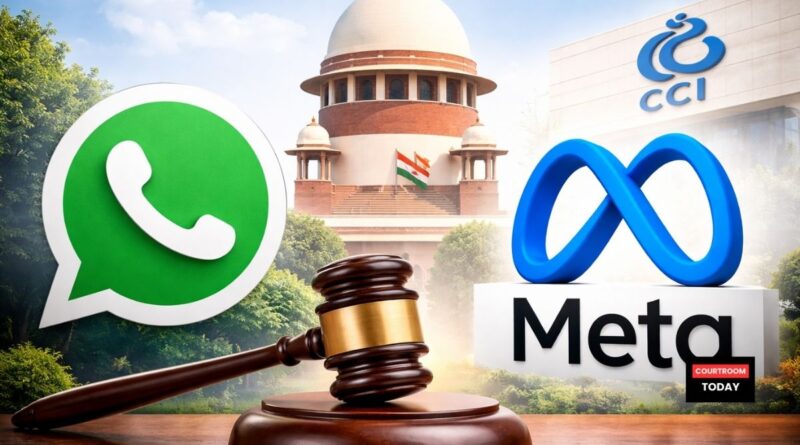
In a significant development in the data privacy dispute involving WhatsApp and Meta, the companies have assured the Supreme Court of India that they will comply with the Competition Commission of India’s rules on data sharing.
The assurance was given during a hearing on petitions challenging directions issued by the Competition Commission of India (CCI). The companies had earlier sought a stay on the implementation of privacy and consent conditions imposed by the regulator.
A Bench led by Chief Justice Surya Kant recorded the statement made on behalf of WhatsApp and Meta. In view of this undertaking, the Court declined to grant any interim stay and dismissed the plea seeking suspension of the CCI’s directions.
The controversy stems from WhatsApp’s updated privacy policy and the manner in which user data was being shared for advertising and business purposes. The CCI had examined the policy and raised concerns about its impact on user choice and market competition.
Following its inquiry, the CCI imposed a penalty of ₹213.14 crore on WhatsApp and Meta. The regulator held that the companies had violated competition norms by allegedly using user data to strengthen their advertising position and market dominance.
The matter later reached the National Company Law Appellate Tribunal. In December last year, the tribunal lifted a complete restriction on data sharing but made it clear that strict safeguards on privacy and user consent must be followed.
Before the Supreme Court, the companies informed the Bench that they would fully implement the required privacy and consent mechanisms by March 16. They also undertook to align their advertising-related data practices with Indian competition law requirements.
During the hearing, the Court made strong observations on the importance of protecting citizens’ personal information. It remarked that “Citizens’ rights should not be compromised in the name of data sharing” and referred to users as “silent customers” who may not fully understand how their data is used.
The Bench even described certain data practices as “theft of personal information” and stressed that privacy cannot be sacrificed for commercial gain. It directed that a status report on compliance be placed before it.
The Court also asked the CCI to examine fresh affidavits filed by the companies outlining the steps taken to implement the regulator’s guidelines. While interim relief has been refused, the main appeal will continue to be heard.
With this assurance, WhatsApp and Meta are now required to obtain clear and explicit user consent before sharing data for advertising purposes. The upcoming compliance deadline is expected to shape how technology companies handle user data in India.