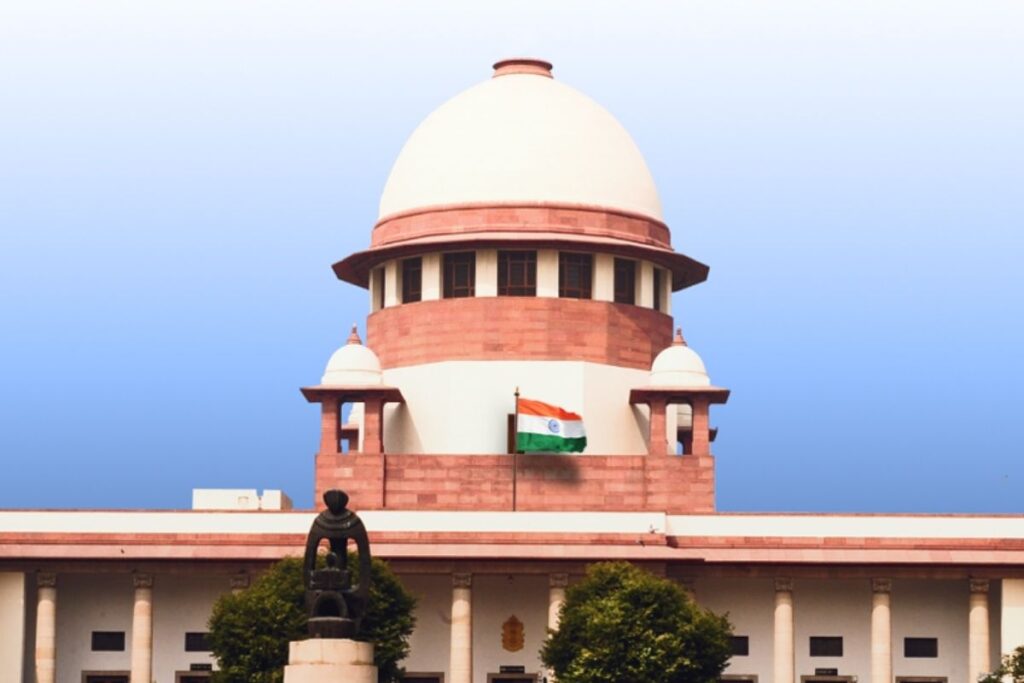
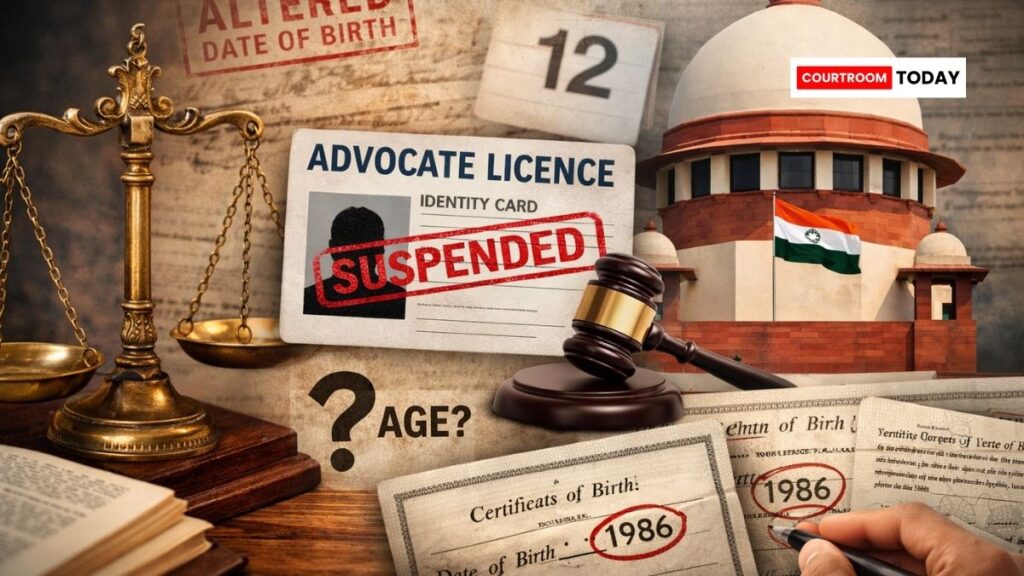
The Supreme Court in Jagmal Singh Mandhan vs. Bar Council of Punjab & Haryana & Ors. refused to entertain a lawyer’s plea challenging the suspension of his licence, nearly 20 years after he began practising. The matter raised serious concerns about alleged misrepresentation at the time of enrolment.
A Bench comprising Justice Vikram Nath and Justice Sandeep Mehta questioned the lawyer’s eligibility to practise. The Court expressed doubt over how he could have been enrolled if he had crossed the prescribed age limit of 45 years.
The case arose from an anonymous complaint alleging that the lawyer had lowered his age during enrolment in 2006 to bypass the age restriction. The allegation prompted a detailed verification of his records by the Enrolment Committee.
During scrutiny, inconsistencies were found in documents relating to his family. The records showed that his two children, who are also advocates, were born in the same year with a gap of only two months between their birth dates.
The Court noted that if the lawyer’s declared age was accepted, it would imply that he was only about 12 years old at the time his children were born. Highlighting these discrepancies, the Bench remarked, “Do we need such state lawyers who change their age to circumvent bar of 45 years?”
The lawyer’s counsel argued that he had practised for nearly two decades and had also served as President of a subdivisional bar association. It was submitted that the action against him was influenced by internal Bar politics.
However, the Court remained unconvinced. It observed that long-standing practice or involvement in Bar politics cannot justify irregularities in enrolment. The Bench also remarked that professional experience cannot cure foundational defects in eligibility.
The counsel further contended that the Enrolment Committee of the Bar Council of Punjab and Haryana lacked authority to impose a final punishment. The Court noted that similar approaches had been adopted by courts in appropriate cases and did not find merit in the objection.
Faced with the Court’s reluctance to intervene, the petitioner sought permission to withdraw the plea. The Supreme Court allowed the withdrawal and directed the Bar Council of India to take an appropriate decision within four months.
Earlier, the Punjab and Haryana High Court had held that while the Enrolment Committee could not permanently remove the lawyer’s name, its order could be treated as a recommendation along with interim suspension. It directed the matter to be placed before the Bar Council of India for final action.
——————————————–
Have a case update, article, or deal to share? Courtroom Today welcomes contributions from lawyers, law firms, and legal professionals. Write to contact@courtroomtoday.com