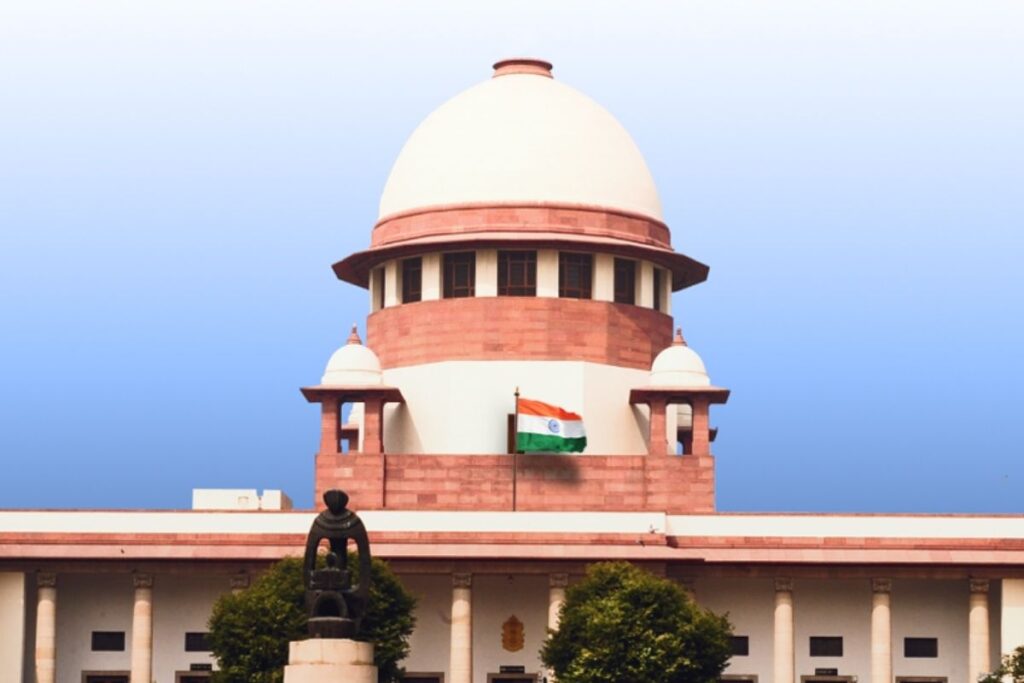
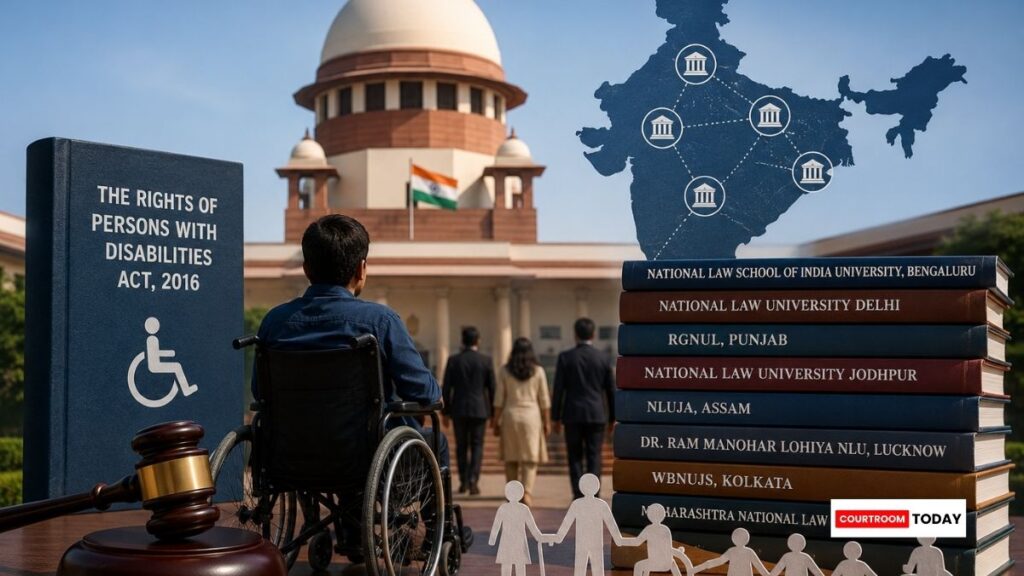
In Justice Sunanda Bhandare Foundation v. Union of India, the Supreme Court has allowed eight National Law Universities (NLUs) to continue assessing how the Rights of Persons with Disabilities Act, 2016 (RPwD Act) is being implemented across the country. The Court said the exercise must ensure real compliance and not remain a mere paper formality.
A Bench of Justices Vikram Nath and Sandeep Mehta passed the order on April 28 while hearing a long-pending matter related to disability rights laws. The case concerns continued failures by States and Union Territories in properly implementing protections granted to persons with disabilities.
The Court was informed that most States and UTs have now appointed nodal officers to supervise implementation of the RPwD Act. These officers were directed to work closely with the institutions conducting the assessment. The Bench observed that the appointments would help build a stronger framework for coordination and accountability.
The assessment is part of “Project Ability Empowerment,” a Supreme Court-monitored initiative launched in September 2025. The project was initially designed to examine conditions in institutions housing persons with disabilities. However, the latest order has expanded its scope to review the overall implementation of the 2016 disability law across India.
The Court clarified that the review must involve a “substantive evaluation” of compliance with the Act. This includes examining institutional mechanisms, accessibility standards, enforcement of rights and the effectiveness of safeguards available to persons with disabilities.
The Bench also noted that non-compliance with disability rights laws has continued for decades. It observed that even under the earlier 1995 disability legislation, States and UTs failed to achieve proper implementation despite repeated judicial directions.
The Court further remarked that the situation had not significantly improved after the enactment of the RPwD Act, 2016. According to the Bench, implementation in several jurisdictions still remains minimal, making continued judicial monitoring necessary.
The Supreme Court directed all authorities, particularly the newly appointed nodal officers, to extend complete cooperation to the NLUs. The Court said such assistance was necessary for collecting accurate information, identifying deficiencies and ensuring that gaps in implementation are addressed within a fixed timeline.
Eight NLUs have been assigned different regions for the exercise. National Law School of India University will oversee southern States and Union Territories, while National Law University Delhi has been tasked with assessing compliance by the Union government.
Other participating institutions include Rajiv Gandhi National University of Law, National Law University Jodhpur, National Law University and Judicial Academy, Dr Ram Manohar Lohiya National Law University, West Bengal National University of Juridical Sciences and Maharashtra National Law University.
The Court also directed the Department of Social Justice and Empowerment to nominate an officer not below the rank of Joint Secretary to coordinate with NLU Delhi during the assessment process.
The matter is scheduled for further hearing on September 22, when the NLUs are expected to submit updated status reports before the Supreme Court.
——————————————–
Have a case update, article, or deal to share? Courtroom Today welcomes contributions from lawyers, law firms, and legal professionals. Write to contact@courtroomtoday.com