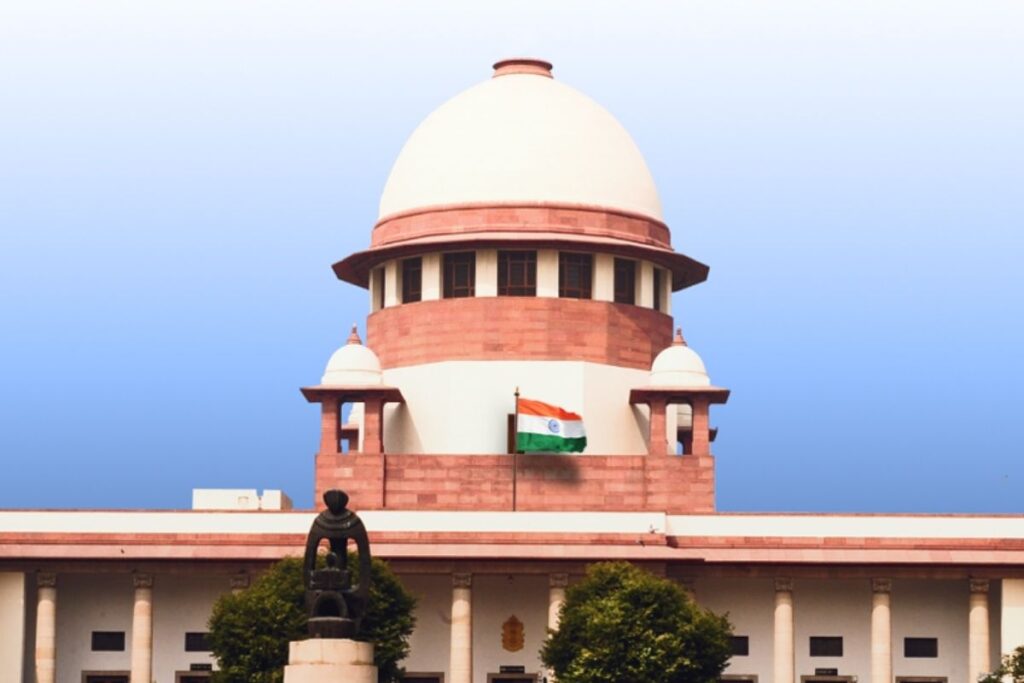
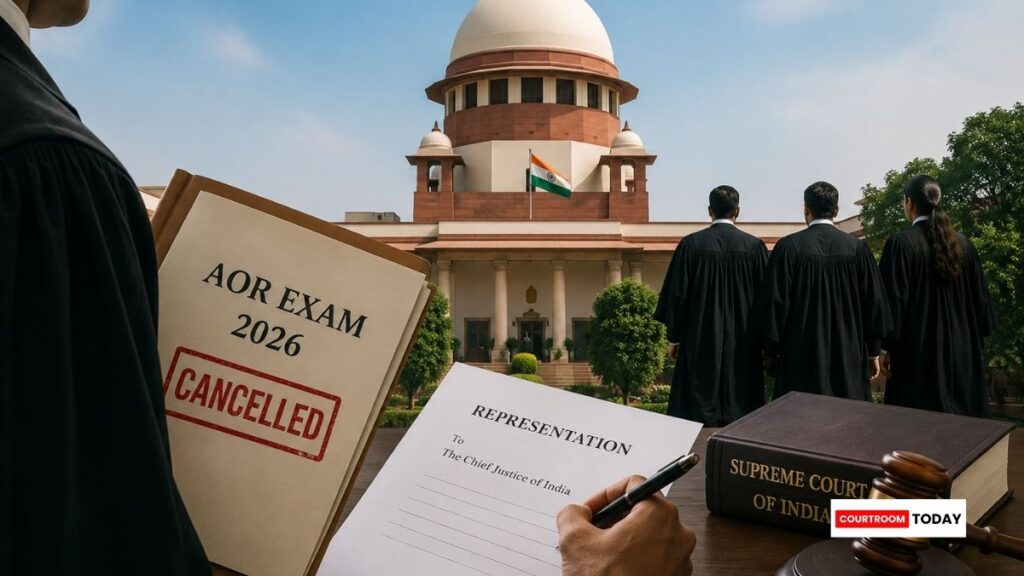
In Dania Nayyar and Ors. v. Registrar General and Ors. and Varisha Sharma and Ors. v. Advocates on Record Examination Cell and Ors., the Supreme Court on Monday asked aggrieved lawyers challenging the cancellation of the 2026 Advocates-on-Record (AOR) examination to submit a detailed representation before the Chief Justice of India on the administrative side.
A bench of Justices Aravind Kumar and P. B. Varale declined to entertain the writ petitions on the judicial side. The Court observed that the issue related to administrative decision-making and therefore could not be examined in writ jurisdiction.
The bench, however, gave liberty to the petitioners to approach the Chief Justice of India with a comprehensive representation within ten days. While disposing of the petitions, the Court remarked that there was no reason to believe the Chief Justice would not consider the matter sympathetically.
Justice Kumar stated, “We have got the most empathetic Chief Justice, we are confident [that the matter would be considered].” Justice Varale also added, “We are optimistic.”
The petitions were filed by advocates who had narrowly failed the previous AOR examination and were eligible under the rules to reappear for the papers they could not clear. Senior Advocate Gopal Sankaranarayanan, appearing for some petitioners, argued that the sudden cancellation of the 2026 examination caused serious prejudice to candidates who had spent the past year preparing for the re-attempt.
The counsel submitted that many candidates had missed qualifying by only one or two papers and were expecting another opportunity in the next scheduled examination cycle. According to the petitioners, the cancellation disrupted their professional plans and created uncertainty regarding their eligibility timeline.
Senior Advocate Shadan Farasat also informed the Court that candidates had invested significant time preparing after narrowly missing qualification in the last examination. He suggested that if the Court wished to regulate the number of AORs, it could consider limiting intake rather than suspending the examination itself.
Senior Advocate Chander Uday Singh made similar submissions and highlighted that several candidates had failed by only a single paper but remained eligible under the existing framework to appear again.
During the hearing, Justice Kumar commented that there were already a large number of AORs. In response, Sankaranarayanan remarked that there was an excess even among senior lawyers.
The controversy arose after the Supreme Court Board of Examiners decided on April 30 not to conduct the AOR examination in 2026. The notification issued by the Registrar and Secretary of the Board stated that the decision was taken “keeping in view the overall strength of the AORs.”
The notification further clarified that the next examination is likely to be conducted in 2027, with the detailed schedule to be announced later.
Only advocates who clear the AOR examination are permitted to file cases directly before the Supreme Court. The petitions in the matter were filed through Advocate-on-Record Mandeep Kalra.
——————————————–
Have a case update, article, or deal to share? Courtroom Today welcomes contributions from lawyers, law firms, and legal professionals. Write to contact@courtroomtoday.com